How Long Does It Take to Write an OQ Protocol?

If you have ever had a project manager ask "how long until the OQ is done?" you already know the question is more complicated than it sounds. The honest answer is that an OQ protocol is not a single deliverable. It is the output of five distinct phases, each on a different clock, with different bottlenecks. Some of those phases are accelerated by tooling. Most are not.
This guide breaks down where the time actually goes in a typical OQ effort, gives realistic ranges by team maturity, and is honest about which parts a tool like Valiqa speeds up and which parts it does not.
If you are weighing whether faster authoring is enough to justify a tool, the math at the end matters more than the marketing.
Why this question is hard to answer
"How long does it take to write an OQ protocol" is one of the most common questions in regulated manufacturing, and most published answers are wrong in the same way. They conflate authoring time with total cycle time, then quote a single number that does not survive contact with an actual qualification project.
Three things make the question genuinely hard.
The first is that authoring is rarely the bottleneck. The slow parts of an OQ effort are upstream (defining what you are even qualifying) and downstream (reviewing, approving, and executing the protocol). When someone says an OQ "took weeks," they almost never mean weeks of typing.
The second is that protocol scope varies. An OQ for a single-mode label printer is not the same project as an OQ for a multi-stage filling and capping line with many critical process parameters. The work scales with equipment complexity.
The third is that team maturity is the largest single variable. An engineer writing their first OQ in an organization without a clear URS will take considerably longer than an engineer who has authored many OQs on similar equipment. The protocol they produce will also be more or less defensible to an auditor depending on which side of that experience curve they sit on.
The honest answer is that you should think in calendar days and engineering hours separately, broken out by phase. That is what this guide does.
The five phases of an OQ and where the time goes
Most OQ efforts can usefully be broken into five phases, in this order. The phases run on different clocks (some are calendar-blocked by other people, some are engineering-hour-blocked by the author), and they have very different time profiles. Specific teams may compress or split these depending on their QMS structure; the model is a planning frame, not a regulatory requirement.
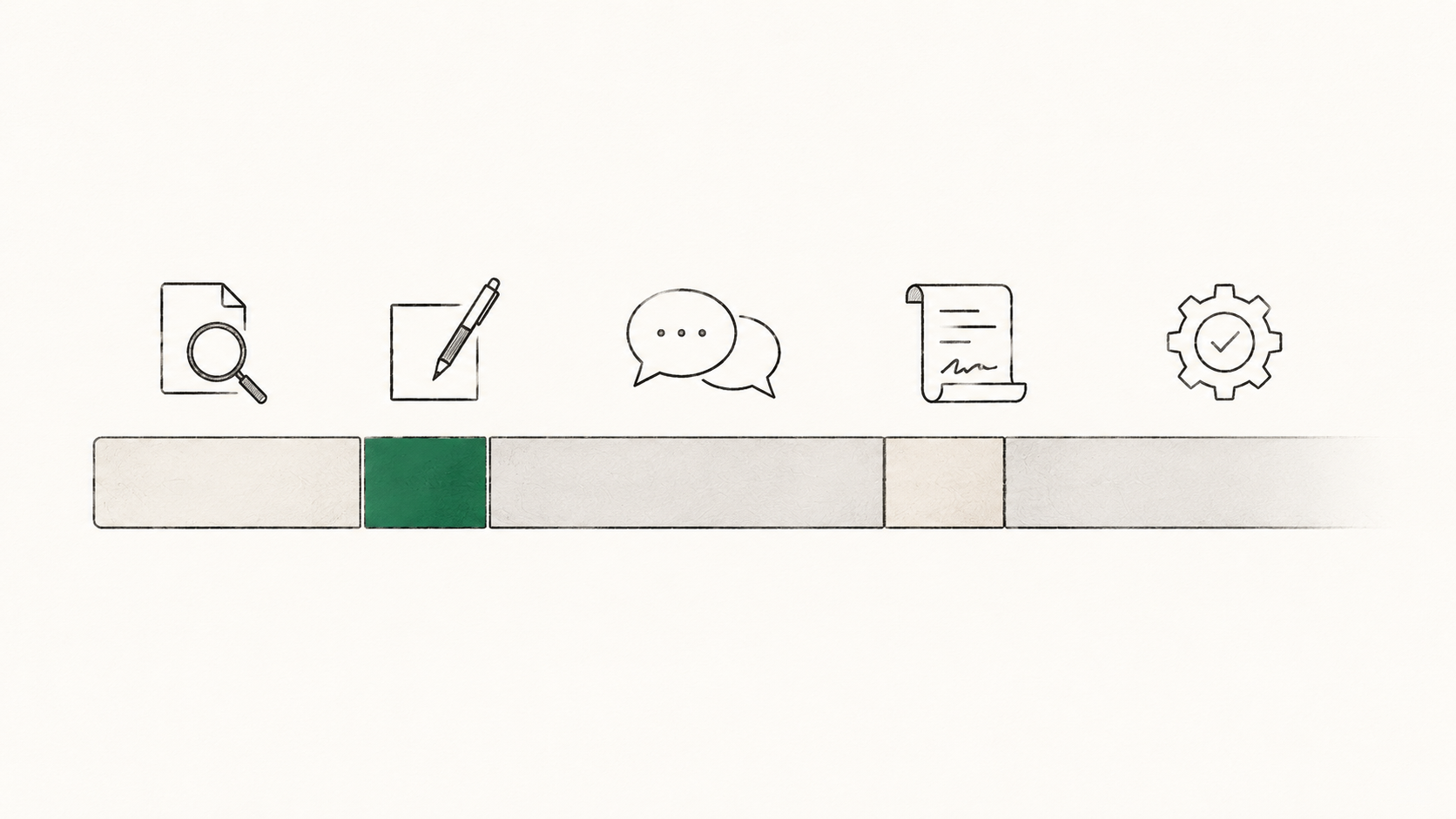
Phase 1: Pre-authoring
This is where you assemble everything you need before a single test step gets written. It includes confirming the equipment URS, locating the design inputs and equipment specifications, reading the risk assessment (or building one), identifying the critical process parameters, and mapping which regulatory framework applies. Settling the low, nominal, and high challenge points for each parameter here keeps phase 2 from stalling on unsourced numbers.
For a well-organized team with a complete URS and an existing risk register, pre-authoring can be quick. For a team that has to backfill missing requirements, chase down design inputs from the equipment vendor, or build a risk assessment from scratch, this phase can dominate the entire effort.
Pre-authoring is where engineers most often skip ahead and pay for it later. A protocol whose acceptance criteria do not trace to a URS or specification will fail review. Hours saved skipping this phase typically surface as rework later in the cycle.
Phase 2: Drafting test steps and acceptance criteria
This is the part everyone pictures when they hear "writing the protocol." Test step descriptions, expected results, acceptance criteria, pass/fail logic, equipment-specific instrumentation calls. It is the phase most affected by reusable libraries and AI assistance.
For an experienced engineer working on similar equipment with a strong template library, drafting goes quickly. For an engineer working on novel equipment, drafting is slower because they are designing the test plan as they write. The line between "designing the test plan" and "writing it down" is fuzzy, and most of the cognitive load lives there.
Honest assessment of where AI accelerators help: this is the phase. Tools that ingest the equipment context, the URS, and the risk basis can produce a defensible first draft of the test steps and acceptance criteria in a fraction of the time a human would spend. The draft still has to be reviewed by the qualified engineer who owns the protocol. We covered the depth of that review in our guide on writing an OQ protocol from scratch.
Phase 3: Internal review
Once the draft exists, it goes through internal review. The number of reviewers and their availability is the dominant factor in this phase's calendar time. Engineering review is typically faster than quality review, because engineering is checking whether the test plan exercises the equipment correctly while quality is checking whether the documentation will hold up under inspection.
Review tends to happen in cycles, not single passes. Most protocols go through more than one round of each before everyone is satisfied. Each round adds calendar time that is largely out of the author's control.
The fastest way to compress this phase is upstream: a protocol that traces clearly from URS to risk to test step to acceptance criterion gets fewer review cycles. We wrote separately about acceptance criteria that won't get flagged in an audit, and most review findings reduce to that issue.
Phase 4: Approval and signature
Once everyone has signed off on the content, the protocol still needs formal approval. Signatures from QA, engineering, manufacturing, and sometimes regulatory affairs. If your environment requires electronic signatures under 21 CFR Part 11, the controls have to be in place: identity binding, intent of signature captured, the meaning of the signature linked to the record.
Approval phase is dominated by stakeholder availability. The actual signature work is fast. Waiting for the right people to be in the same week is not.
Teams that work this phase well batch protocols for approval cycles instead of routing them one at a time. They also tend to have a clear protocol approval workflow defined in their QMS, which removes the "who needs to sign this" cycle from every individual qualification.
Phase 5: Execution and evidence capture
Strictly speaking, executing the protocol and capturing the evidence is a separate effort from writing it. We include it here because nobody on a project plan separates "writing the OQ" from "running the OQ," and the time profile of phase 5 affects how the whole effort feels.
Execution time depends almost entirely on the equipment and the test plan. A short OQ on a single-mode device finishes quickly. An OQ that exercises a multi-mode line under several worst-case scenarios extends substantially, especially when deviations are found and re-runs are required.
The most common source of execution time blowout is acceptance criteria that turn out to be untestable, or evidence requirements that cannot actually be captured by the available instrumentation. Those problems should have been caught in phase 1 or 2 but often surface here. Each one creates an unplanned loop back into the earlier phases.
Realistic ranges by team maturity
The combined effect of the five phases varies more by team maturity than by equipment type. Three broad profiles:
A first-time validation engineer, working on novel equipment, without a clear URS, in an organization that has not run many qualifications, will spend most of their time in phase 1 and phase 3. They are learning the regulatory framework, the equipment, and the company's documentation conventions simultaneously. Calendar time per OQ in this profile extends well beyond what an experienced team would expect.
An experienced validation engineer with a working template library, a clear URS process, and a defined review workflow can take a moderate-complexity OQ from kickoff to approved protocol in a much shorter calendar window. Their engineering hours are concentrated in phase 1 and phase 2; phases 3 and 4 are mostly waiting.
A team using an AI protocol accelerator on top of the second profile collapses phase 2 directly: the drafting work compresses, with the qualified engineer reviewing and adjusting the draft instead of typing it from scratch. The manual versus generated protocol comparison digs into where each approach puts the effort and the risk. The other phases benefit only indirectly, and only when the upstream work is solid. A consistent, well-structured draft can shorten review rework, but a draft built on a weak URS or risk basis will surface those gaps during review just as a hand-written draft would.
The gap between profile 1 and profile 2 is enormous; the gap between profile 2 and profile 3 is meaningful but smaller; and the gap shows up in different phases.
What actually speeds it up
There are five investments that compound across every qualification a team runs. Each one shortens a specific phase.
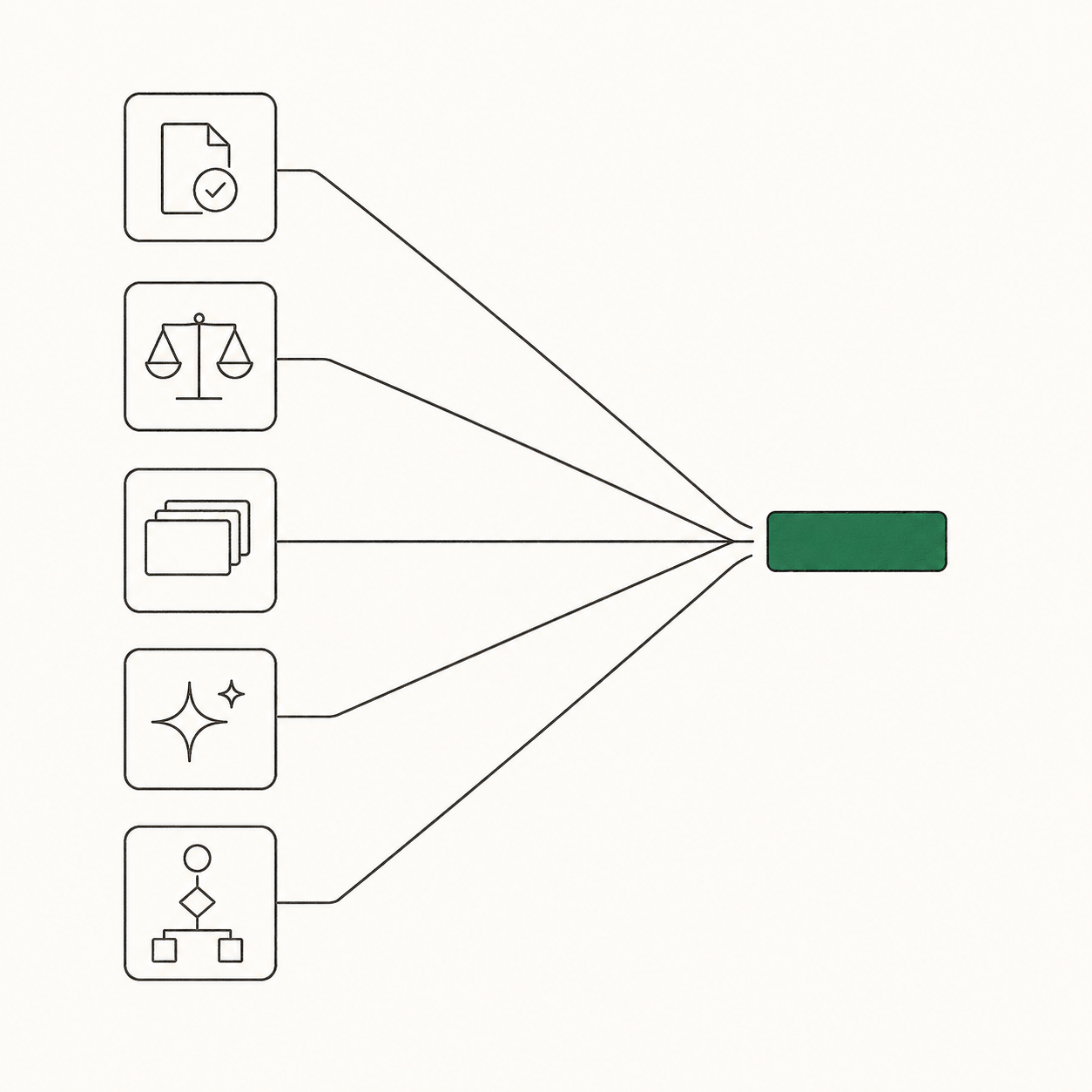
A clear URS, written before the equipment is procured, eliminates most of phase 1. Engineers can pull requirements directly into the protocol scope instead of reconstructing them after the fact.
An upfront risk assessment, ideally a FMEA scoped to the equipment, shortens both phase 1 and phase 2. The test plan can be derived from the identified risks rather than designed from scratch. A risk-based scope also defends the protocol during phase 3 review.
A reusable test step library, with steps that have been audited and accepted on prior protocols, compresses phase 2. The author is selecting and adapting rather than inventing. The library only works if it is maintained; stale steps create rework downstream.
An AI accelerator that ingests the equipment context, URS, and risk basis to produce a first draft is the most direct compression of phase 2. The first-draft quality depends entirely on how well the inputs were prepared in phase 1. Garbage in, garbage out applies here as everywhere.
A defined review and approval workflow, with named reviewers and a batching policy, compresses phases 3 and 4. This is process work, not tool work, but it usually saves more calendar time than any tool.
If you are early in your investment cycle, the order that returns the most calendar time per dollar spent is: workflow definition first, then URS discipline, then template/library work, then AI tooling.
What does NOT speed it up
A few approaches look like time-savers but cost more than they save.
Skipping the URS or risk assessment in the name of moving faster is the single most expensive shortcut in validation. The work saved in phase 1 surfaces as rework in phases 3 and 5, often with a CAPA attached.
Copy-pasting protocols from prior equipment, without thinking through whether the test plan is appropriate for the current asset, looks like a phase 2 shortcut. It is actually a phase 3 and phase 5 expense, because the inappropriate test steps fail review or fail during execution.
Skipping or rubber-stamping internal review compresses phase 3 on paper. In practice it pushes the same findings into the regulator's inspection report instead of into a tracked review cycle, which is much worse.
Treating an unreviewed AI draft as the final protocol is a category error. Valiqa, and any honest tool in this space, produces drafts that go through your team's qualified review and approval process. Skipping that review does not save time; it transfers risk from the author to the patient or end user of the regulated product. Regulators expect a qualified human to sign their name to the protocol. Every shortcut that survives is one that compresses authoring or workflow time without compressing the engineering judgment time.
A worked example: realistic timeline for one OQ
Consider a single OQ for a piece of moderate-complexity packaging equipment in a medical device manufacturing environment. The equipment has four operating modes, six critical process parameters, and a documented URS. The team has a working QMS, a defined review workflow, and an existing risk register for similar equipment.
Phase 1 (pre-authoring) is a working-day-scale effort: the author confirms the URS, reviews the existing risk assessment, identifies the critical process parameters that will drive the test plan, and confirms which regulatory frameworks apply (in this case, 21 CFR Part 820 under the FDA QMSR with ISO 13485:2016 incorporated by reference, plus 21 CFR Part 11 for the electronic records and signatures involved in approval and execution).
Phase 2 (drafting) is a working-day-scale effort for an experienced engineer with a template library. With an AI accelerator producing the first draft, the same engineer reviews and adjusts in less time. Either way, the output is the same artifact: a complete protocol with test steps, acceptance criteria traced to URS and risk, and regulatory mappings in context.
Phase 3 (internal review) typically spans calendar days, with reviewer availability and number of review rounds as the dominant factors. The engineering hours per round are short; the calendar time is mostly waiting and addressing findings.
Phase 4 (approval and signature) depends entirely on stakeholder availability. The work itself is fast.
Phase 5 (execution and evidence capture) is the most variable phase. A clean run on moderate-complexity equipment can complete inside a working week. A run with deviations requiring re-execution can extend longer.
The roll-up for a single OQ from kickoff to approved-and-executed typically lands in several working weeks of calendar time, with engineering hours from the validation author and reviewer hours distributed across the organization. Faster than that is possible with strong team practice and tooling; slower than that is common in teams without those investments.
Different equipment, different teams, different timelines. The phase shape stays the same.
Where tooling helps, and where it does not
If you are evaluating an AI protocol accelerator and the question is whether it will solve your validation timeline problem, the honest answer is: it primarily compresses phase 2, and only secondarily (via consistency) affects review. If your OQ runs over multiple calendar weeks and phase 2 represents a small slice of that, even compressing phase 2 to nearly nothing leaves you at roughly the same calendar timeline. The hours saved are real, but they sit inside a much longer project.
Where tooling actually pays off:
Backlog. If your team has a queue of equipment qualifications and the limiting factor is engineering hours per protocol, compressing phase 2 on every qualification compounds. The capacity reclaimed scales with the number of protocols you ship in a year.
Consistency. Tooling that produces structured drafts removes the variation that comes from each engineer interpreting a template differently. Reviews go faster because findings are about content, not formatting.
Cognitive load. Most engineers prefer reviewing a draft to authoring one from scratch. The output quality is sometimes higher because the human is exercising critical judgment rather than fatigue-juggling structure and content at the same time.
If you are evaluating tools, the right question is not "how much faster is the protocol." It is "where in our five-phase cycle does this remove engineering hours, and how does that compound across our backlog?"
"How long" is not a tooling question. It is a process question. Get the upstream phases right, define the review workflow, then add tooling where it actually compresses the work.
Further reading
- IQ vs OQ vs PQ and what actually goes in each one
- How to write an OQ protocol from scratch
- How to determine if you need IQ only or full IQ/OQ/PQ
- How to write acceptance criteria that won't get flagged in an audit
- How to choose validation software for equipment qualification
- Self-scoring tool: which category of validation software fits your team
If the timeline itself is your problem, we laid out the workflow that removes the rework in how to create audit-ready validation protocols quickly.
Get new validation guides in your inbox
One or two practical guides a week, written for validation engineers. Unsubscribe anytime. Privacy policy
Frequently Asked Questions
Ready to automate your validation documentation?
Generate audit-ready IQ/OQ/PQ protocols in minutes, not weeks.
Get StartedWe use essential cookies for authentication and security. With your consent, we also use Microsoft Clarity, Google Analytics, and the LinkedIn Insight Tag on our marketing pages to understand how visitors navigate the site and to measure our advertising. Read our privacy policy.